Delayed ejaculation doesn’t get talked about nearly as much as finishing too quickly. Most conversations around sexual performance focus on premature ejaculation, but many men deal with the opposite problem. Climax takes a long time, feels difficult to reach, or just doesn’t happen at all.
If that sounds familiar, you’re not alone. Delayed ejaculation can feel confusing and frustrating, especially when your body seems to be doing everything right. You might feel aroused, have a strong erection, and still struggle to reach orgasm.
The good news is that there are several reasons this can happen, and there are practical ways to work through it.
What Is Delayed Ejaculation?
Delayed ejaculation refers to difficulty reaching orgasm and ejaculation despite adequate sexual stimulation. For some men, it means climax takes much longer than they’d like. For others, it means orgasm doesn’t happen during sex at all.
This can happen during intercourse, oral sex, or even masturbation. Sometimes someone can climax during solo play but struggles during partnered sex. Other times, orgasm is difficult to reach in any situation.
What makes this issue confusing is that outward signs of arousal might still be present. You may have an erection and feel physically stimulated, yet orgasm still feels out of reach.
That disconnect is often where the challenge sits.
The Arousal Disconnect
One way to understand delayed ejaculation is by thinking about arousal as a scale.
Imagine zero as neutral. Five is when things start warming up. Eight is a strong erotic flow where pleasure is building. Ten is orgasm.
With delayed ejaculation, your body might look like it’s sitting at a nine. You may be fully erect and physically stimulated. But internally, you might feel more like a three or four.
Your body and your brain aren’t quite on the same page.
This disconnect between physical arousal and erotic engagement is a common reason orgasm becomes difficult to reach.
Common Reasons Delayed Ejaculation Happens
There’s rarely just one cause. Delayed ejaculation usually happens because several factors are interacting at the same time.
Medications and Substances
Certain medications can affect orgasm and ejaculation. Some antidepressants and other medications that influence brain chemistry may slow or inhibit the ejaculation reflex.
Alcohol and cannabis can also play a role. While they might help people relax, they can dull sensation and interfere with the neurological pathways involved in orgasm.
Mental Distractions
Your brain is the most powerful sexual organ you have. If your attention gets pulled away from the experience, arousal can stall.
Stress about work, relationship concerns, fatigue, or general life distractions can all interrupt the erotic experience.
Emotional or Sexual Disconnection
Feeling emotionally disconnected from your partner can influence arousal and orgasm.
Sex often works best when there’s a sense of emotional safety, trust, and connection. If that connection feels off, your nervous system may not fully engage with the experience.
Routine and Predictability
This is one of the most common contributors.
When sex becomes repetitive or mechanical, the brain can get bored. The same position, the same rhythm, and the same sequence every time may reduce erotic excitement.
When the brain isn’t engaged, it becomes harder for the body to complete the orgasm response.
The Role of the Pelvic Floor Muscles
The pelvic floor muscles play an important role in sexual function.
These muscles sit at the base of the pelvis and support the bladder, bowel, and reproductive organs. They also contribute to erection and ejaculation.
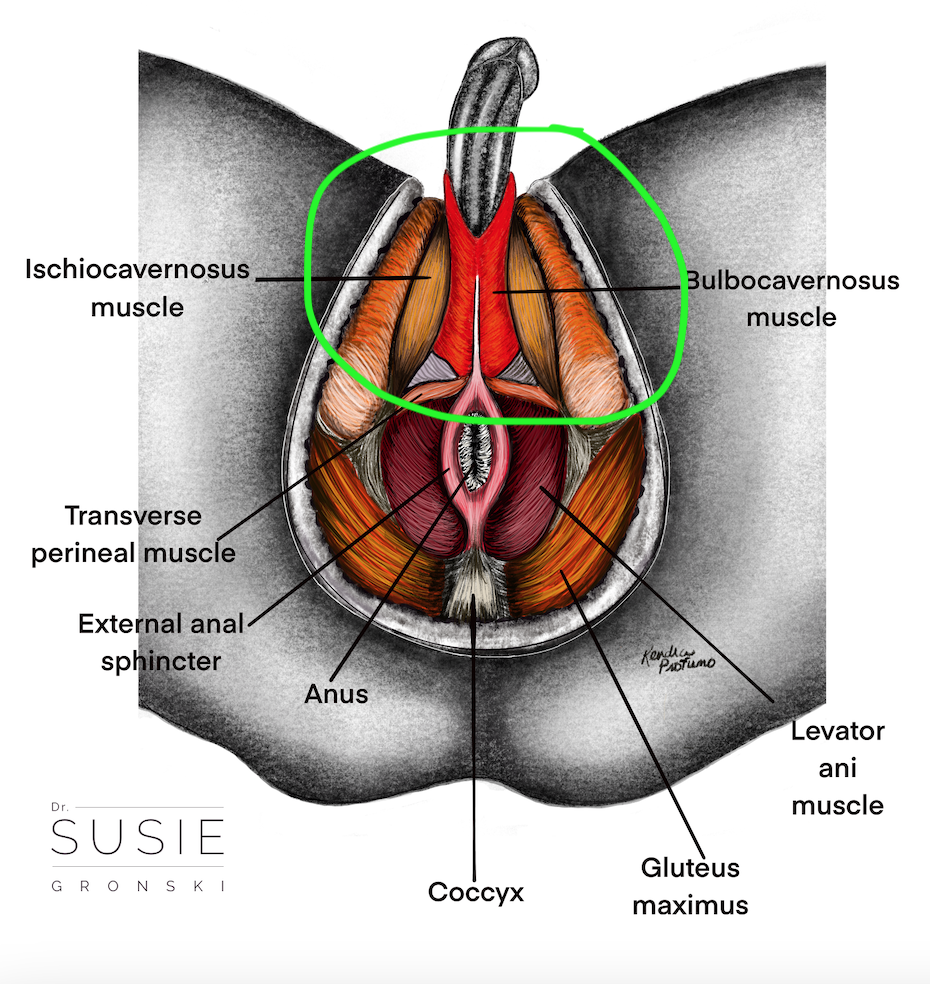
During ejaculation, pelvic floor muscles contract rhythmically and involuntarily. These contractions help propel semen through the urethra and out of the body.
If these muscles aren’t functioning well, the ejaculation process may not be as efficient or coordinated.
Several pelvic floor patterns may contribute to delayed ejaculation:
Weak or deconditioned pelvic floor muscles
Muscle fatigue from prolonged effort
Poor coordination between contracting and relaxing
Excess tension or tightness in the muscles
Trying too hard to force a climax can also fatigue these muscles. When the muscles lose stamina, the reflex that drives ejaculation can become less effective.
You’re Not Broken
When orgasm becomes difficult, many men quickly jump to the conclusion that something’s wrong with them.
That belief can create even more pressure and anxiety.
In many cases, the issue isn’t about something being broken. It’s about missing pieces of erotic engagement.
Sex can sometimes turn into a task. Get hard. Get in. Get it done.
But arousal often requires more than physical stimulation. Mental, emotional, and sensory engagement all play a role in helping the body move toward orgasm.
Get Curious About What Turns You On
One helpful approach is shifting from performance to exploration.
Instead of focusing only on reaching orgasm, focus on discovering what genuinely feels good.
This might involve experimenting with different types of stimulation. Intercourse is only one option.
You might explore rubbing your penis between your partner’s breasts while manually stimulating their clitoris. You might try standing positions during oral sex. Changing positions during intercourse can also shift stimulation in helpful ways.
Even small adjustments can make a difference. Changing rhythm, using slower movements, or adding circular motions instead of only thrusting can stimulate different sensations.
Fantasy and mental stimulation can also play a role. Your imagination can be a powerful contributor to arousal.
Touching in areas that are often overlooked can also help. Testicles, thighs, buttocks, and other parts of the body can contribute to the erotic experience.
Mixing things up allows you to discover what truly works for your body.
Talk With Your Partner
Communication can feel uncomfortable when something isn’t working the way you hoped.
But honest conversation can change the entire dynamic.
Your partner may already notice something feels off and might be wondering if they’re doing something wrong.
Open communication can remove that uncertainty. Let them know what you’re experiencing and reassure them it’s not about attraction or desire.
You can approach the conversation as exploration rather than problem-solving. Think of it as co-creating pleasure together.
Some couples find conversation tools like card decks or guided question books make it easier to talk about sex.
These tools can introduce topics in a way that feels lighter and less intimidating.
Rethink Masturbation
Solo play can be a helpful tool for retraining your nervous system.
If you often masturbate while intentionally delaying orgasm, your body may learn to hold back the ejaculation reflex.
Allowing yourself to masturbate without trying to delay climax can help restore a more natural response.
Pay attention to sensation, breathing, and arousal rather than focusing only on timing.
This can help your nervous system relearn how to move toward orgasm without hesitation.
Build Erotic Anticipation
Arousal doesn’t have to start only when sexual activity begins.
Allow your mind to simmer throughout the day.
Thinking about erotic moments, fantasies, or pleasurable memories can build anticipation. That mental buildup helps your brain move closer to an erotic state before physical touch even begins.
When sexual activity starts, you may already be further along the arousal scale.
Reduce Performance Pressure
Performance pressure is a powerful inhibitor of sexual response.
Many men feel an unspoken expectation to perform perfectly during sex. They believe they should last the right amount of time, climax at the right moment, and always know what to do.
That pressure activates the stress response in the nervous system.
When your nervous system shifts toward anxiety, it moves away from the relaxed and engaged state that supports orgasm.
It can help to acknowledge this pressure and intentionally shift the focus away from performance.
Sex doesn’t need to follow a script.
Try Pleasure Focused Experiences
One suggestion that often helps couples is taking intercourse off the table from time to time.
Plan a pleasure-focused experience instead.
This might involve lighting a massage candle, exploring touch with feathers or soft textures, or using vibrators like a wand.
Focus on sensation and connection rather than orgasm as the goal.
When performance pressure disappears, the body often becomes more responsive.
Pelvic Floor Muscle Awareness
Pelvic floor muscle training may also support sexual function.
Improving awareness of how these muscles contract and relax can help coordinate the ejaculation reflex.
You might experiment with gentle pelvic floor contractions and relaxations while you’re not aroused. Notice how the muscles feel when they tighten and release.
Later, you might explore how these muscles respond during sexual arousal.
Some people find contracting the muscles enhances sensation. Others find that intentionally relaxing the muscles allows pleasure to build more easily.
Everyone responds a little differently, so experimentation can help you discover what works best for your body.
When to Seek Professional Help
If self-exploration and communication don’t seem to improve the situation, it may be helpful to seek professional guidance.
A pelvic health physical therapist can evaluate pelvic floor muscle function and help address issues related to strength, coordination, or muscle tension.
A sex therapist can help explore psychological, emotional, and relational factors that may influence arousal and orgasm.
These professionals often work together to support both the physical and emotional aspects of sexual health.
Sometimes, having an experienced guide helps break the cycle you may feel stuck in.
Final Thoughts
Delayed ejaculation can feel isolating, but it’s a common experience for many men.
Your body isn’t broken. Often, the issue involves a mix of physical, emotional, and situational factors that influence how arousal unfolds.
By getting curious about what truly turns you on, communicating with your partner, reducing pressure, and supporting pelvic floor function, many people find their way back to a more satisfying sexual experience.
Sex works best when it’s less about performance and more about connection, curiosity, and pleasure.
This information is not intended to substitute for professional medical advice, diagnosis, or treatment. Always seek the advice of a healthcare professional with any questions you may have regarding treatment, medications/supplements, or any medical diagnoses. This information is intended for educational purposes only and is in no way to substitute the advice of a licensed healthcare professional.