WHAT HAPPENS DURING A MALE PELVIC FLOOR EXAM?
If you’ve never had a male pelvic floor exam, you might have no idea what to expect. You may also have questions about what the therapist examines, whether an internal exam is required, or what happens during the physical exam.
A male pelvic floor exam can include both genital, external and internal pelvic floor assessments, but the exam is always individualized. Your concerns, symptoms, goals, comfort level, and medical history all help determine what gets assessed.
What Is the Male Pelvic Floor?
The pelvic floor is a group of muscles located at the bottom of the pelvis. Think of it like a hammock that stretches from the pubic bone in the front to the tailbone in the back, although, these muscles and structures are more complex than just a hammock (wink).
The pelvic floor includes muscles like the levator ani, bulbospongiosus, ischiocavernosus, and transverse perineal muscles just to name a few.
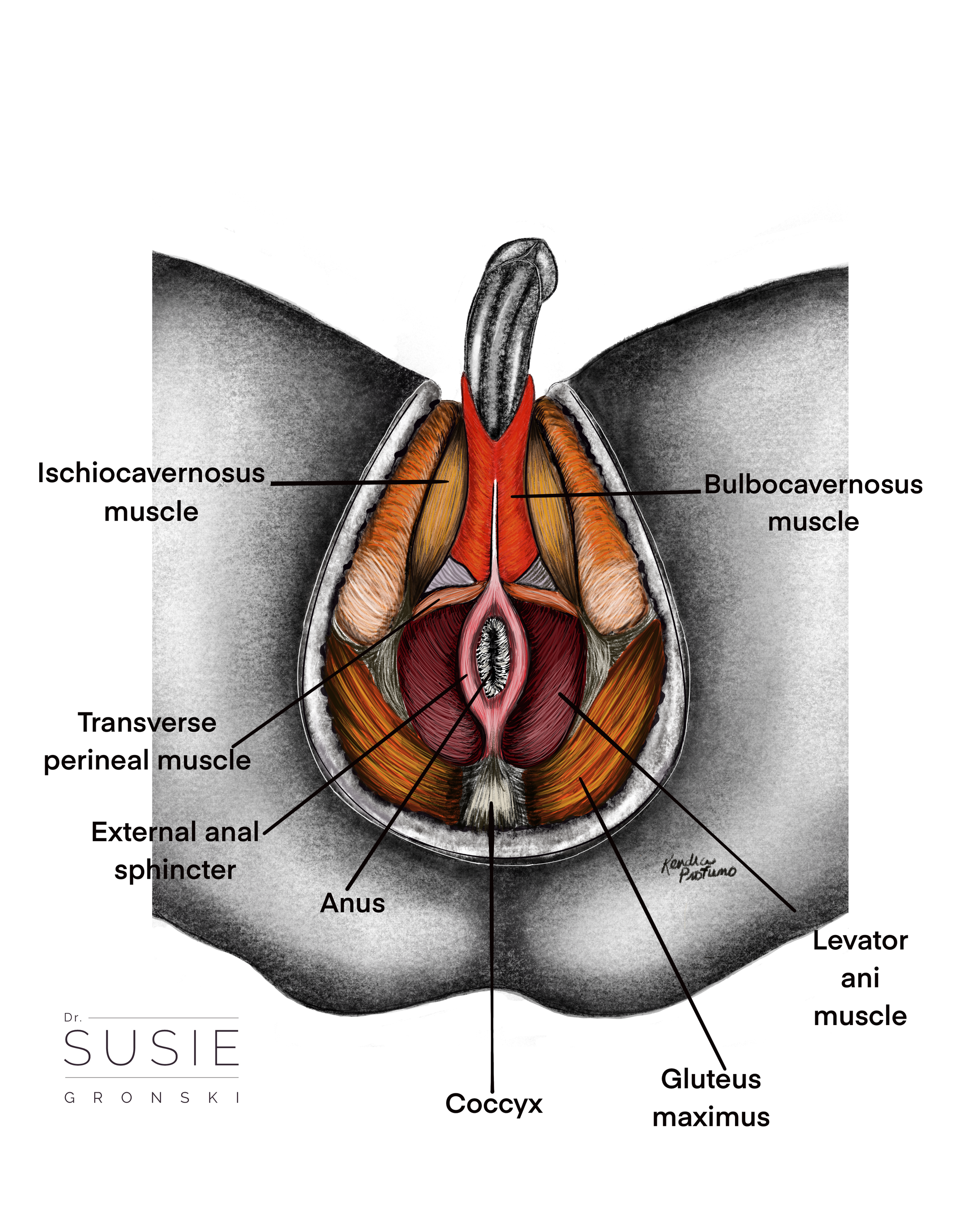
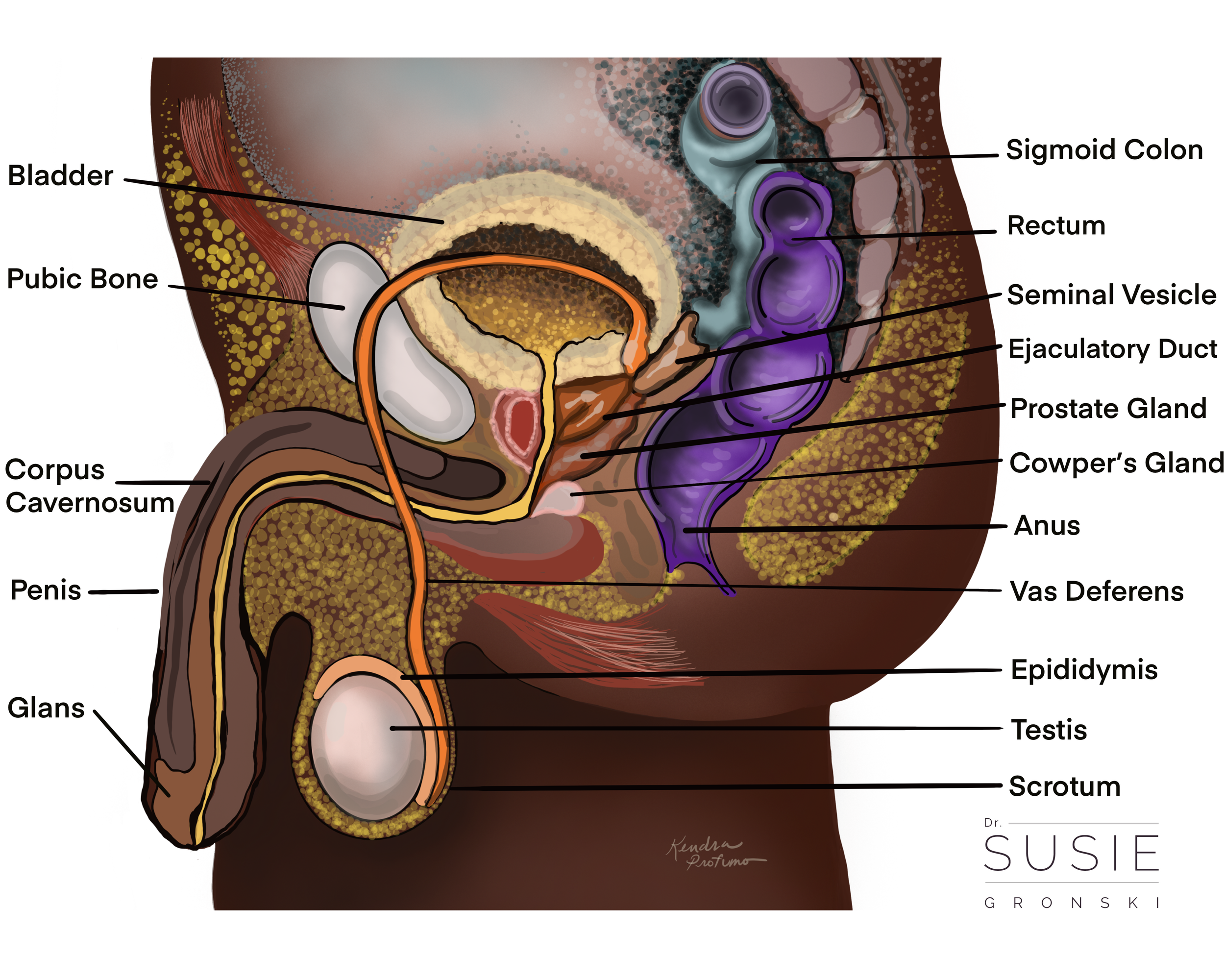
These muscles are involved in much more than urination and bowel function. They also play roles in erections, ejaculation, sexual sensation, pelvic stability, and pressure management.
The pelvic floor also doesn't work by itself. It's influenced by the nervous system, reproductive, urinary and digestive systems, cardiovascular health, breathing, movement patterns, and your overall health. That's one reason pelvic floor dysfunction in men can have multiple contributing factors.
What Happens Before the Exam?
Before any physical assessment, we talk.
I want to understand what's bringing you in, what you're experiencing, what you're concerned about, and what you want to get out of pelvic floor therapy.
I'll also explain what the assessment may involve and answer questions before we begin.
Consent is ongoing throughout the entire exam. You can ask questions, pause, or decline any part of the assessment.
A pelvic floor exam and treatment is a collaborative process.
It's also worth knowing that because we're assessing structures involved in sexual function and body reflexes, spontaneous erections or even ejaculation can sometimes happen during an exam. These responses are handled professionally.
The External Pelvic Floor Exam
We start by visually observing the genital and perineal area.
I'm looking at things such as pelvic floor movement during a voluntary contraction and relaxation, as well as how the perineum moves when pressure inside the abdomen changes, for example, like with a cough or like you’re trying to have a poo.
These movements can give us information about how the pelvic floor responds to different types of pressure and if any symptoms are present.
Sensation Testing
Sensation testing in the areas supplied by the S2, S3, and S4 nerves may be performed.
Depending on the reason for the exam, this can involve different types of sensory testing, such as light touch, pressure, temperature, or vibration.
Changes in sensation, and your awareness of these sensations, can provide important information about how the nerves supplying the pelvic region are functioning.
If you've had surgery, an injury, or another procedure that resulted in scar tissue, we may gently move the scar tissue in different directions to evaluate tissue mobility and sensitivity.
Genital and External Pelvic Floor Exam
A genital exam may also be appropriate if someone is experiencing penis pain or testicular pain.
Another part of the external pelvic floor exam involves assessing pelvic floor muscle tone.
This means getting a sense of how much resistance there is when the muscles are gently moved, contracted, relaxed or stretched.
We're also paying attention to discomfort, tenderness, or sensitivity.
The pudendal nerve is one of the major nerves supplying the genital and perineal skin and the pelvic floor muscles.
When nerve involvement is suspected, a pudendal neurodynamics assessment may be performed. This looks at how the nerve responds to movement and tension with direct touch, active and passive movement.
Some people with pudendal nerve-related symptoms describe sensations such as burning, stabbing, or sharp pain.
A nerve assessment can help determine whether the symptoms may involve the nervous system and whether additional evaluation is appropriate.
The pelvic floor also has reflexes that can be assessed.
One example is the bulbospongiosus reflex. This involves stimulating the head of the penis and observing the resulting pelvic floor and anal muscle contraction.
Depending on the clinical situation, other reflex testing may be considered when there are concerns about neurological involvement.
These assessments aren't performed simply because they're part of a checklist. They're used when they're relevant to the person's symptoms and clinical presentation.
Pelvic Floor Ultrasound
Before an internal assessment, pelvic floor ultrasound may also be an option.
This is especially useful for people who aren't ready for an internal or external assessment but still want information about their pelvic floor muscle health and function.
Rehabilitative ultrasound can be performed abdominally or transperineally, which means scanning through the perineal area, underneath the scrotum.
Ultrasound can help us visualize pelvic floor structures like the bulb of the penis and pelvic floor muscles, observe things such as pelvic floor muscle movement, bladder fullness in relation to perceived urgency, and bladder and urethral support.
It can also provide visual feedback. Being able to see what's happening while you're contracting or relaxing your pelvic floor can make it easier to understand how the muscles work.
What Happens During the Internal Pelvic Floor Exam?
If an internal assessment is appropriate and you've consented to it, the exam involves inserting one, and sometimes two, gloved and lubricated fingers into the anorectal canal.
The position can vary. Side lying is common, but the assessment can also be performed in other positions depending on your comfort and clinical needs.
Before insertion, the skin around the anus is observed for things such as hemorrhoids, scarring, or visible rectal prolapse.
Comfort is a priority.
If there's significant resistance at the anal opening, we don't force insertion. We allow the sphincter to relax and determine whether continuing is appropriate.
If insertion isn't comfortable or isn't possible, the assessment can be deferred for another time.
What Are We Assessing Internally?
Once the internal assessment is underway, several things can be evaluated.
We can assess the tone of the external anal sphincter, voluntary contraction and relaxation, sensation, and areas of tenderness or scarring.
The deeper pelvic floor muscles, including the levator ani, can also be assessed.
The therapist may gently touch and stretch the muscles with their finger and note the assumed tone, tenderness, muscle twitches, or other responses like bearing down as if you were defecating.
The pelvic floor muscles aren't just about strength. We're also looking at how well they can relax, coordinate with other muscles, and respond to different demands.
Testing Pelvic Floor Strength and Coordination
Pelvic floor muscle strength can be assessed using a digital muscle test.
One commonly used system is the modified Oxford scale, which rates contraction strength from 0 to 5.
But strength is just one piece of the puzzle.
We also assess endurance by looking at how long you can sustain a contraction or how many contractions you can perform before the muscles fatigue.
Rapid contractions can also be tested over a short period of time.
Then there's relaxation.
Can the muscles fully relax after contracting? Can they return toward their resting state? Do they stay tense?
These details can be just as important as how strongly the muscles contract.
Pelvic floor function is about coordination, not just squeezing.
We may look at how the pelvic floor works with the rest of the body during activities such as coughing, moving an arm or leg, urinating, or having a bowel movement.
We're also looking for muscles that may be working when they don't need to.
For example, someone may tighten their glutes or push with their abdominal muscles instead of producing an isolated pelvic floor contraction.
Understanding these patterns can help guide treatment and exercise recommendations based on your goals.
Prostate Palpation
The prostate may also be assessed during an internal pelvic floor examination.
Prostate palpation can provide information about tenderness or pain that may be relevant to certain pelvic pain conditions.
It's important to understand that a pelvic health physical therapist isn't a urologist and doesn't diagnose prostate disease.
If something concerning is identified, a referral to a urologist will be recommended.
For some patients, prostate palpation can also be an educational experience. It can help them understand where the prostate is located and how the surrounding pelvic structures relate to their symptoms.
Do You Have to Have an Internal Exam?
No.
A pelvic floor assessment can involve many different components, and not every person needs every part of the exam.
If you're uncomfortable with an internal assessment, you can discuss other options with your pelvic health therapist.
Pelvic floor ultrasound, external observation, movement assessment, functional activity testing, breathing assessment, muscle strength and mobility testing, and other approaches may provide useful information depending on your symptoms and goals.
The goal isn't to perform an internal exam just because it's available; it’s to gather the information that's relevant to your goals and collaboratively create an assessment and treatment approach that works for you.
What Can a Male Pelvic Floor Exam Tell You?
A comprehensive pelvic floor exam can provide information about muscle strength, tone, endurance, coordination, sensation, reflexes, nerve function, tissue mobility, and pain.
It can also help identify lifestyle, movement, or postural patterns that may be contributing to symptoms.
For men dealing with pelvic pain, urinary or bowel symptoms, sexual health concerns, or other pelvic floor issues, understanding how these muscles are functioning can be an important part of developing an individualized treatment plan.
What Should You Expect From a Pelvic Floor Exam?
A male pelvic floor exam should be collaborative, respectful, and tailored to your needs.
You should know what the therapist is doing and why. You should have the opportunity to ask questions, give consent, pause, or decline an assessment.
If you've been nervous about having a male pelvic floor exam because you don't know what to expect, understanding the process can make it feel a lot less mysterious.
In my latest video, I walk through the exam step-by-step and explain what we're looking at during each part of the exam. The full real-person demonstration is available exclusively on Patreon for those who want to see what the assessment looks like in real life..
This information is not intended to substitute for professional medical advice, diagnosis, or treatment. Always seek the advice of a healthcare professional with any questions you may have regarding treatment, medications/supplements, or any medical diagnoses. This information is intended for educational purposes only and is in no way to substitute the advice of a licensed healthcare professional.